

Dental Implants

Treatment time: up to 3-6 months (including healing time)
Cost: from £2095.00*

Full mouth implants available on consultation

Book your appointment today

Overview Treatment Steps FAQs

*fee quoted is for the dental implant ONLY. Additional fees will apply for Implant crowns, Implant bridges or Implant Retained Dentures. Our dentists will comprehensively detail a treatment plan inclusive of fees after a thorough consultation.

0% APR Finance Available Subject to age and Status, minimum spend applies

Fixed, Strong and Long-lasting replacement teeth

Have you got a gap in your smile?

Do you hide from photographs and at special occasions because you feel self-conscious about a missing tooth or loose dentures?

Maybe you have looked at other options for replacing your tooth but want something more natural looking and secure?

Implants offer an incredibly stable, highly aesthetic and long lasting solution.

Treatment steps

Consultation: Book an appointment to talk through your concerns and what you’d like to change about your smile.

Assessment and plan: We examine your teeth and gums, take X-rays, and give you a written treatment plan.

3. Implant placement: Your implant is placed under local anaesthetic, with time allowed for it to heal.

4. Your new tooth: We fit your custom-made crown so you can eat, speak and smile with confidence.

For lasting teeth health and a beautiful smile, rely on our expert dental services

Book an Appointment

What are implants?

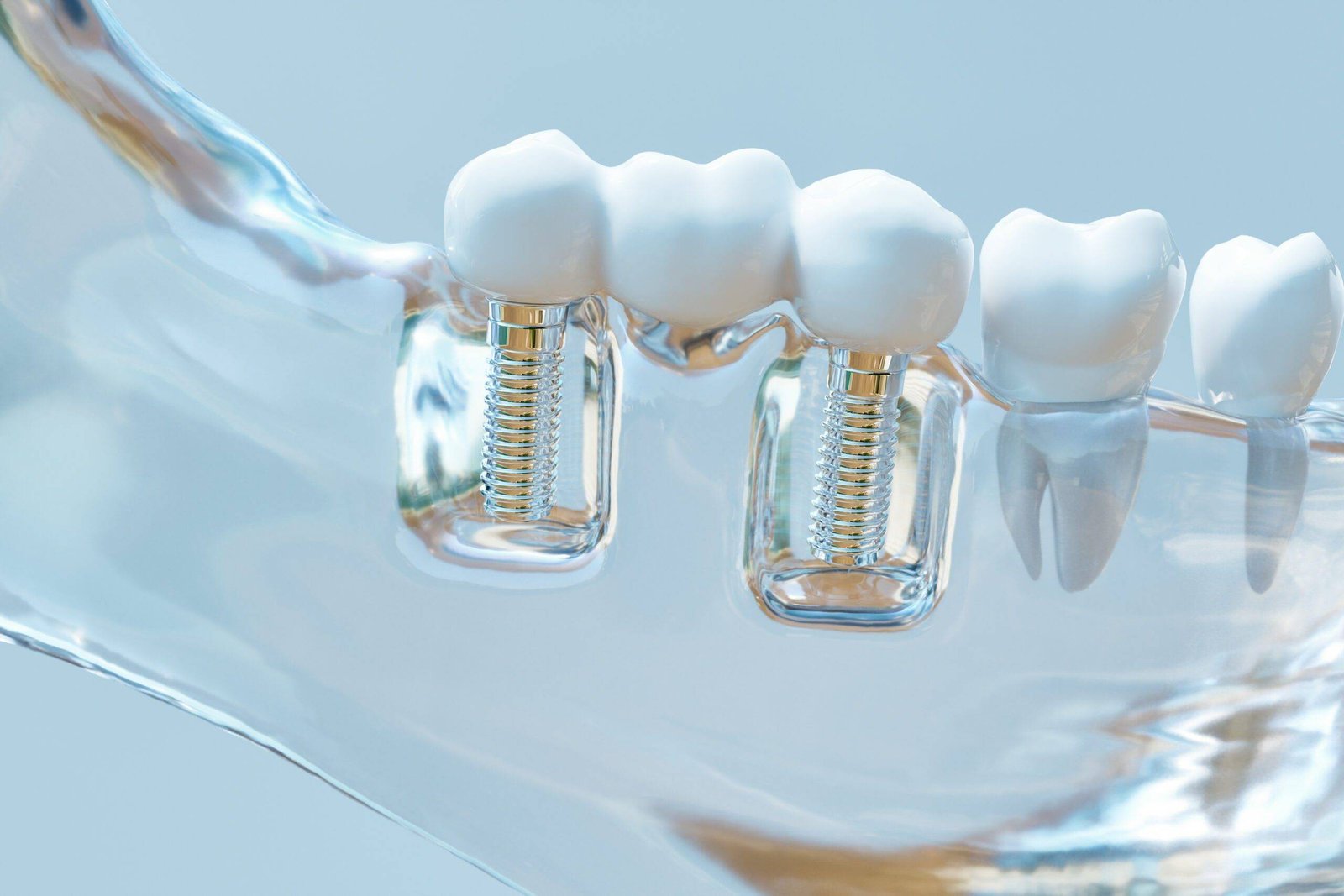
Dental implants are a long-lasting, strong and secure way to replace one missing tooth or several. Each implant is a small titanium post that is placed into your jawbone to act as a new tooth root.

We use titanium because it is very well tolerated by the body. Over the following months, the bone grows around and bonds to the implant, a process known as osseointegration. This creates a solid foundation that can support a single crown, a bridge or a denture.

A small connector called an abutment is then fitted to the top of the implant, and your crown is attached to it. The crown is custom-made to match the shape and colour of your natural teeth, so it blends into your smile.

What does the treatment involve?

Assessment and planning
First, we check that implants are right for you. We look at your general health, your gums and the amount of bone in your jaw, and take X-rays and digital scans so your implant can be planned accurately. If there isn’t quite enough bone, we may recommend a bone graft first, and we’ll explain this along with the cost before anything goes ahead.

Placing the implant
Your titanium implant is placed carefully into your jaw under local anaesthetic, so the area is completely numb. If you feel anxious, sedation is available. The procedure usually takes around 60 to 90 minutes for a single implant.

Healing
It takes around 3–6 months for the implant to heal and fuse with your bone. During this time, we fit a temporary tooth to protect your gum and keep your smile looking natural.

Fitting your crown
Once the implant has healed, we attach the abutment and fit your final crown. It’s always an exciting moment when we see your completed smile for the first time!.

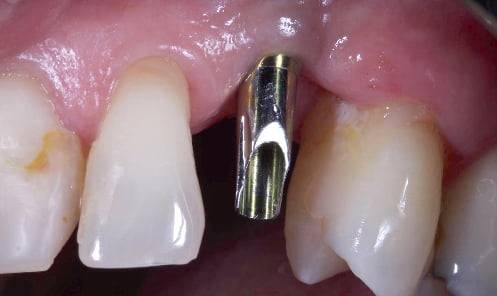
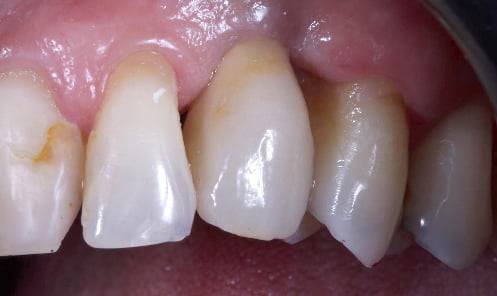
Before & Afters

Before After

FAQs

Do dental implants hurt?

The procedure itself shouldn’t hurt. We always use local anaesthetic for implant surgery, so the area is completely numb during treatment. If you’re nervous, we can arrange sedation so you feel calm and relaxed.

Afterwards, it’s normal to feel some tenderness or mild swelling as the gum and bone heal. Paracetamol or ibuprofen usually relieves this, and it should fade within a few days.

How long does dental implant treatment take?

Most patients have their final tooth fitted 3–6 months after the implant is placed. This healing time is essential, because it allows the bone to fuse securely with the implant. Treatment can take longer if you need a bone graft first.

The implant placement itself takes around 60 to 90 minutes, or longer if several implants are being placed.

In some cases, an immediate implant can be placed at the same appointment as your tooth is removed, which shortens the overall treatment time. It isn’t suitable for everyone, as it depends on the health of the bone and gum around the tooth. Your dentist will talk you through the pros and cons.

What happens if I don’t have enough bone for an implant?

You may still be able to have an implant. When a tooth is lost, the jawbone in that area gradually shrinks because there’s no longer a root to stimulate it. This is especially common in people who have worn dentures for many years.

We can often rebuild lost bone with a bone graft before or at the same time as placing the implant. If the missing tooth is in the upper back jaw, where the sinus sits close to the bone, a procedure called a sinus lift may be used to create more space. Your X-rays will show us whether you need either, and we’ll explain the options and costs at your consultation.

Do I still have to see my dentist while my implant heals?

Yes. It’s important to keep up with your routine dental care during the treatment. The healthier your teeth and gums are, the faster you’ll recover without any issues. It’s crucial to keep your healing implant safe from bacteria so it has the best chance of being strong and successful.

How long will implants last?

With good care, a dental implant can last for many years, often decades. Because the implant bonds directly to the jawbone, it tends to outlast other ways of replacing teeth, such as bridges and dentures.

The crown on top may eventually need replacing due to everyday wear, typically after 10–15 years. Implants can’t decay, but the gum and bone around them can still be affected by gum disease. Brushing twice a day, cleaning between your teeth and seeing the hygienist regularly will help your implant last as long as possible.

Am I too old for implants?

No one is too old for implants. What matters more is your general health and the amount of bone in your jaw, and bone can often be rebuilt with grafting if needed. It’s never too late to enjoy a secure, comfortable set of teeth, and many older patients choose to replace loose dentures with implants or implant-retained dentures.

Why should I have implants?

For many people, implants are the most secure long-term way to replace missing teeth. Unlike removable dentures, they help prevent the gradual bone loss that happens after teeth are lost, which is why dentures often need adjusting over time as they become loose or sore.

If you have a single missing tooth, it’s worth replacing it sooner rather than later. Neighbouring teeth can slowly drift into the gap, which may affect your bite and lead to tooth wear or jaw discomfort. An implant fills the gap without needing to file down the healthy teeth on either side, as a bridge would.

How much do dental implants cost in Bradford?

At Eccleshill Dental, a single dental implant costs from £2,095, the same price for members and private patients. The final cost depends on how many teeth you’re replacing, whether you need a bone graft, the position of the tooth and whether you choose sedation. You’ll receive a written, itemised quote after your consultation, before any treatment begins.

Can I get dental implants on the NHS?

For most people, no. In England, NHS-funded implants are usually limited to patients with a specific clinical need, such as after mouth cancer treatment, a serious facial injury, or teeth missing from birth. These cases are treated through hospital referral. For routine tooth loss, the NHS offers dentures and bridges, so implants are usually a private treatment.

Can I have implants if I smoke or have diabetes?

Often, yes, but both can affect healing. Smoking increases the risk of an implant failing, so we strongly recommend stopping before and after treatment. Well-controlled diabetes isn’t usually a barrier. Please also tell us if you grind your teeth, take medication for osteoporosis, or have had radiotherapy to the head or neck, as these can affect your treatment plan.

Is there a minimum age for dental implants?

Implants are usually placed once the jaw has finished growing, which is typically from around 18. Before that, we can discuss temporary options for replacing a missing tooth.

What are the risks of dental implants?

Dental implants have a high success rate when placed in healthy bone and looked after well. As with any minor surgery, there are some risks, including infection, swelling and, rarely, nerve irritation or an implant that doesn’t fuse with the bone. Over the long term, the main risk is peri-implantitis, an infection of the gum and bone around the implant caused by plaque build-up. We’ll explain your individual risks at your consultation.

What can I eat after dental implant surgery?

Stick to soft foods such as soup, yoghurt, eggs and pasta for the first few days, and avoid chewing directly on the implant site. Avoid very hot food and drinks, alcohol and smoking for at least 48 hours. Once your final crown is fitted, you can eat normally, just as you would with a natural tooth.

Is an implant better than a bridge?

Both replace a missing tooth, but they work differently. A bridge relies on the teeth either side of the gap, which need to be filed down to support it. An implant stands on its own in the jawbone, leaving your healthy teeth untouched and helping to prevent bone loss. Bridges cost less upfront, so we’ll talk you through both options and their prices at your consultation.

Get in touch with our team today